7 Lovely Logics – shared by my friend Michelle

Posted in Life Prose | Leave a comment

RedHat 6 – Porting code to RH6

We are moving our product’s OS from RedHat 5 to 6, as well as new version of ‘gcc’ (4.X) along with RH6.  To port the existing code to RH6 with new compiler, there might be a lot of things we need to care. This post gives a brief summary for the issue during our trial and hopefully would be updated timely. May it help:)

1. C++ header file include
#include <iostream.h> -> #include <iostream>
#include <typeinfo.h> -> #include <typeinfo>
#include <list.h> -> #include <list>
#include “poll.h” -> #include <poll.h>
#include “fcntl.h” -> #include <fcntl.h>
a. All the standard C++ header file need to omit “.h”;
b. Standard C header file could have both format:
        #include <stdio.h> OR
        #include <cstdio>
   NOT  #include “stdio.h”

2. SCTP library
libsctp.a -> -lsctp
RH 6 does not support static lib of SCTP. Should be dynamically linked.

3. SCTP struct/API
sctp_adaption_layer_event -> sctp_adaptation_layer_event
SCTP_ADAPTION_INDICATION -> SCTP_ADAPTATION_INDICATION
sctp_connectx(int, sockaddr*, int) -> sctp_connectx(int, sockaddr*, int, sctp_assoc_t*)
a. Member name updated in structure sctp_event_subscribe
b. Member name updated in enum sctp_sn_type
c. New argument updated in function sctp_connectx

4. Linux Kernel API
extern struct net_device *dev_get_by_name( const char *name) ->
extern struct net_devide *dev_get_by_name( struct net *net, const char *name)

Posted in OS, Programming, Stuff about Compiler | Tagged , , , | 1 Comment

shellcode 1 – comments for the doc “The Basics of Shellcoding”

Recently been doing some stuffs on Shellcode. After a while wandering in the net, I found the doc “The Basics of Shellcoding” by Angelo Rosiello may be the very concise introduction to start with shellcoding, especially for the newbie like myself – baby step. However, though with brief and clear description in this doc, I feel frustrated when I was trying to do it myself. Stack manipulation with string and system call is expected in the doc (part C below); while assembly code my here is C lib call and string in .rodata (part B below). Detailed workaround to get the opcode in part C is listed below. On the other hand, to implement shellcode, we really need to put everything we need in the stack and use system call directly, as address of .rodata and C lib function call would be dynamically changed per each binary.

/* A: Original C source code in the doc */
/home/daveti/shellcode: cat rosiello.c
#include <stdio.h>
int main()
{
        write( 0, “WWW.ROSIELLO.ORG”, 16);
        exit(0);
}

/* B: Objdump for the binary of the code above */
080481d0 <main>:
#include <stdio.h>
int main()
{
 80481d0:       55                      push   %ebp
 80481d1:       89 e5                   mov    %esp,%ebp
 80481d3:       83 ec 08                sub    $0x8,%esp
 80481d6:       83 e4 f0                and    $0xfffffff0,%esp
 80481d9:       b8 00 00 00 00          mov    $0x0,%eax
 80481de:       29 c4                   sub    %eax,%esp
        write( 0, “WWW.ROSIELLO.ORG”, 16);
 80481e0:       83 ec 04                sub    $0x4,%esp
 80481e3:       6a 10                   push   $0x10
 80481e5:       68 68 f7 08 08          push   $0x808f768
 80481ea:       6a 00                   push   $0x0
 80481ec:       e8 8f 5a 00 00          call   804dc80 <__libc_write>
 80481f1:       83 c4 10                add    $0x10,%esp
        exit(0);
 80481f4:       83 ec 0c                sub    $0xc,%esp
 80481f7:       6a 00                   push   $0x0
 80481f9:       e8 16 04 00 00          call   8048614 <exit>
 80481fe:       90                      nop
 80481ff:       90                      nop

/* C: Assembly code for shellcode expected in the doc */
xor    %eax,%eax
xor    %ebx,%ebx
xor    %edx,%edx
push   %eax
push   $0x47524f2e
push   $0x4f4c4c45
push   $0x49534f52
push   $0x2e575757
mov    %esp,%ecx
mov    $0x10,%dl
mov    $0x4,%al
int    $0x80
xor    %eax,%eax
xor    %ebx,%ebx
mov    $0x1,%al
int    $0x80

/* D: Shellcode in the doc */
/home/daveti/shellcode: cat rosiello_shellcode.c
#include <stdio.h>
char shellcode[]=
        “x31xc0x31xdbx31xd2x50x68x2ex4f”
        “x52x47x68x45x4cx4cx4fx68x52x4f”
        “x53x49x68x57x57x57x2ex89xe1xb2”
        “x10xb0x04xcdx80x31xc0x31xdbxb0”
        “x01xcdx80”;
int main()
{
        void (*routine)();
        /* daveti: gcc 4.X would report error! */
        (long) routine = &shellcode;
        printf(“Size: %d bytesn”, sizeof(shellcode));
        routine();
        return 0;
}

/* E: Run the shellcode in the doc */
/home/daveti/shellcode: ./rosiello_shellcode
Size: 44 bytes
WWW.ROSIELLO.ORG/home/daveti/shellcode: gcc -v
Reading specs from /usr/lib/gcc-lib/i386-redhat-linux/3.2.2/specs
Configured with: ../configure –prefix=/usr –mandir=/usr/share/man –infodir=/usr/share/info –enable-shared –enable-threads=posix –disable-checking –with-system-zlib –enable-__cxa_atexit –host=i386-redhat-linux
Thread model: posix
gcc version 3.2.2 20030222 (Red Hat Linux 3.2.2-5)
/home/daveti/shellcode: uname -a
Linux lssxlinux1.ih.lucent.com 2.6.32-042stab044.11 #1 SMP Wed Dec 14 16:02:00 MSK 2011 i686

/* F: gcc -S rosiello.c */
/home/daveti/shellcode: cat rosiello.s
        .file   “rosiello.c”
        .section        .rodata
.LC0:
        .string “WWW.ROSIELLO.ORG”
        .text
.globl main
        .type   main,@function
main:
        pushl   %ebp
        movl    %esp, %ebp
        subl    $8, %esp
        andl    $-16, %esp
        movl    $0, %eax
        subl    %eax, %esp
        subl    $4, %esp
        pushl   $16
        pushl   $.LC0
        pushl   $0
        call    write
        addl    $16, %esp
        subl    $12, %esp
        pushl   $0
        call    exit
.Lfe1:
        .size   main,.Lfe1-main
        .ident  “GCC: (GNU) 3.2.2 20030222 (Red Hat Linux 3.2.2-5)”

/* G: Modify rosiello.s to rosiello_daveti.c with desired assembly in C */
/home/daveti/shellcode: cat rosiello_daveti.s
        .file   “rosiello_daveti.c”
        .section        .rodata
        .text
.globl main
        .type   main,@function
main:
        pushl   %ebp
        movl    %esp, %ebp
        subl    $8, %esp
        andl    $-16, %esp
        movl    $0, %eax
        subl    %eax, %esp
        xor     %eax, %eax
        xor     %ebx, %ebx
        xor     %edx, %edx
        push    %eax
        push    $0x47524f2e
        push    $0x4f4c4c45
        push    $0x49534f52
        push    $0x2e575757
        mov     %esp, %ecx
        mov     $0x10, %dl
        mov     $0x4, %al
        int     $0x80
        xor     %eax, %eax
        xor     %ebx, %ebx
        mov     $0x1, %al
        int     $0x80
.Lfe1:
        .size   main,.Lfe1-main
        .ident  “GCC: (GNU) 3.2.2 20030222 (Red Hat Linux 3.2.2-5)”

/* H: gcc -o rosiello_daveti rosiello_daveti.s – make sure our change work */
/home/daveti/shellcode: ./rosiello_daveti
WWW.ROSIELLO.ORG/home/daveti/shellcode:

/* I: Objdump to get the opcode instead of gdb */
080482f4 <main>:
 80482f4:       55                      push   %ebp
 80482f5:       89 e5                   mov    %esp,%ebp
 80482f7:       83 ec 08                sub    $0x8,%esp
 80482fa:       83 e4 f0                and    $0xfffffff0,%esp
 80482fd:       b8 00 00 00 00          mov    $0x0,%eax
 8048302:       29 c4                   sub    %eax,%esp
 8048304:       31 c0                   xor    %eax,%eax
 8048306:       31 db                   xor    %ebx,%ebx
 8048308:       31 d2                   xor    %edx,%edx
 804830a:       50                      push   %eax
 804830b:       68 2e 4f 52 47          push   $0x47524f2e
 8048310:       68 45 4c 4c 4f          push   $0x4f4c4c45
 8048315:       68 52 4f 53 49          push   $0x49534f52
 804831a:       68 57 57 57 2e          push   $0x2e575757
 804831f:       89 e1                   mov    %esp,%ecx
 8048321:       b2 10                   mov    $0x10,%dl
 8048323:       b0 04                   mov    $0x4,%al
 8048325:       cd 80                   int    $0x80
 8048327:       31 c0                   xor    %eax,%eax
 8048329:       31 db                   xor    %ebx,%ebx
 804832b:       b0 01                   mov    $0x1,%al
 804832d:       cd 80                   int    $0x80
 804832f:       90                      nop

/* J: Finally we have got the workable opcode in the doc:) */

Posted in Security | Tagged , , , , , | Leave a comment

side effect of “++” in C – compiler implemenation with assembly

This post shows a common known side effect of “++” operator in C programming because of different compiler implementation. Assembly code from PowerPC and x86 with gcc is provide to show the key difference and the reason why for this side effect. Detailed comments may not be completely correct. However, should be easy to get the point:)

/* sideEffect1.c */

#include <stdio.h>

int main()
{
        int n = 0;
        printf(“n1 = %d, n2 = %dn”, n++, n++);
        return 0;
}

/* PowerPC */

/loads/umts6/cpsb/montavista/M8cge4.0_drop090305/montavista/cge/devkit/ppc/7xx/bin/ppc_7xx-gcc -v
Reading specs from /loads/umts6/cpsb/montavista/M8cge4.0_drop090305/montavista/cge/devkit/ppc/7xx/bin/../lib/gcc/powerpc-montavista-linux/3.4.3/specs
Configured with: ../configure –host=i686-pc-linux-gnu –target=powerpc-montavista-linux –prefix=/opt/montavista/foundation/devkit/ppc/7xx –exec-prefix=/opt/montavista/foundation/devkit/ppc/7xx –bindir=/opt/montavista/foundation/devkit/ppc/7xx/bin –sbindir=/opt/montavista/foundation/devkit/ppc/7xx/sbin –sysconfdir=/opt/montavista/foundation/devkit/ppc/7xx/etc –datadir=/opt/montavista/foundation/devkit/ppc/7xx/share –includedir=/opt/montavista/foundation/devkit/ppc/7xx/include –libdir=/opt/montavista/foundation/devkit/ppc/7xx/lib –libexecdir=/opt/montavista/foundation/devkit/ppc/7xx/libexec –localstatedir=/opt/montavista/foundation/devkit/ppc/7xx/var –sharedstatedir=/opt/montavista/foundation/devkit/ppc/7xx/share –mandir=/opt/montavista/foundation/devkit/ppc/7xx/man –infodir=/opt/montavista/foundation/devkit/ppc/7xx/info –build=i686-pc-linux-gnu –program-transform-name=s,^,ppc_7xx-, –enable-cross –with-sysroot=/opt/montavista/foundation/devkit/ppc/7xx/target !
 –enable-shared –enable-languages=c,c++ –enable-__cxa_atexit –enable-threads=posix –disable-multilib –with-gxx-include-dir=${prefix}/lib/gcc/powerpc-montavista-linux/3.4.3/../../../../target/usr/include/c++/3.4.3 –with-numa-policy=no –with-cpu=750 –libexecdir=/opt/montavista/foundation/devkit/ppc/7xx/lib
Thread model: posix
gcc version 3.4.3 (MontaVista 3.4.3-25.0.145.0801204 2008-06-04)

<dv111-s01c10h0:lss>/export/home/lss:
# uname -a
Linux dv111-s01c10h0 2.6.10_mvlcge401-katana #2403 Fri Jan 20 10:25:01 CST 2012 ppc
<dv111-s01c10h0:lss>/export/home/lss:
# ./sideEffect1
n1 = 0, n2 = 1
<dv111-s01c10h0:lss>/export/home/lss:

1000028c <main>:
#include <stdio.h>

int main()
{
1000028c:       94 21 ff e0     stwu    r1,-32(r1)      /* store stack pointer to r1-32 and update r1=r1-32 */
10000290:       7c 08 02 a6     mflr    r0              /* get link register – set up the stack frame */
10000294:       93 e1 00 1c     stw     r31,28(r1)      /* store nonvolatile r31 to 28(r1) */
10000298:       90 01 00 24     stw     r0,36(r1)       /* store old link register to 36(r1) */
1000029c:       7c 3f 0b 78     mr      r31,r1          /* move stack pointer to r31 */
        int n = 0;
100002a0:       38 00 00 00     li      r0,0            /* load 0 to r0 */
100002a4:       90 1f 00 08     stw     r0,8(r31)       /* store r0(0) to 8(r31)=8(r1), (n=0, 8(r31))*/
        printf(“n1 = %d, n2 = %dn”, n++, n++);
100002a8:       81 3f 00 08     lwz     r9,8(r31)       /* load 8(r31) to r9 */
100002ac:       7d 20 4b 78     mr      r0,r9           /* move r9 to r0(0) */
100002b0:       39 29 00 01     addi    r9,r9,1         /* r9=r9+1, (n++, r9(1)) */
100002b4:       91 3f 00 08     stw     r9,8(r31)       /* store r9 to 8(r31), (n=1, 8(r31)) */
100002b8:       81 3f 00 08     lwz     r9,8(r31)       /* load 8(r31) to r9(1) again */
100002bc:       7d 2b 4b 78     mr      r11,r9          /* move r9 to r11(1) */
100002c0:       39 29 00 01     addi    r9,r9,1         /* r9=r9+1, (n++, r9(2)) */
100002c4:       91 3f 00 08     stw     r9,8(r31)       /* store r9 to 8(r31), (n=2, 8(r31)) */
100002c8:       3d 20 10 05     lis     r9,4101         /* load 4101 to r9 */
100002cc:       38 69 4c ac     addi    r3,r9,19628     /* r3=r9+19628=4101+19628=23729 – first parameter */
100002d0:       7c 04 03 78     mr      r4,r0           /* move r0 to r4(0) – second parameter */
100002d4:       7d 65 5b 78     mr      r5,r11          /* move r11 to r5(1) – third parameter */
100002d8:       4c c6 31 82     crclr   4*cr1+eq        /* clear the control register */
100002dc:       48 00 0b 59     bl      10000e34 <_IO_printf>   /* printf(“…”, 0, 1); */
        return 0;
100002e0:       38 00 00 00     li      r0,0            /* load 0 to r0(0) */
}
100002e4:       7c 03 03 78     mr      r3,r0           /* move r0 to r3(0) */
100002e8:       81 61 00 00     lwz     r11,0(r1)       /* load saved link register (in printf) to r11 */
100002ec:       80 0b 00 04     lwz     r0,4(r11)       /* load next link register (saved in main) to r0 */
100002f0:       7c 08 03 a6     mtlr    r0              /* set link register to r0 – recover link register */
100002f4:       83 eb ff fc     lwz     r31,-4(r11)     /* load -4(r11) (original saved in 28(r1)) back to nonvolatile r31 */
100002f8:       7d 61 5b 78     mr      r1,r11          /* move saved link register to stack pointer */
100002fc:       4e 80 00 20     blr                     /* exit */

/* x86 */

/home/daveti/Ctest/sideEffect/x86: uname -a
Linux lssxlinux1.ih.lucent.com 2.6.32-042stab044.11 #1 SMP Wed Dec 14 16:02:00 MSK 2011 i686
/home/daveti/Ctest/sideEffect/x86: gcc -v
Reading specs from /usr/lib/gcc-lib/i386-redhat-linux/3.2.2/specs
Configured with: ../configure –prefix=/usr –mandir=/usr/share/man –infodir=/usr/share/info –enable-shared –enable-threads=posix –disable-checking –with-system-zlib –enable-__cxa_atexit –host=i386-redhat-linux
Thread model: posix
gcc version 3.2.2 20030222 (Red Hat Linux 3.2.2-5)
/home/daveti/Ctest/sideEffect/x86: ./sideEffect1
n1 = 1, n2 = 0
/home/daveti/Ctest/sideEffect/x86:

080481d0 <main>:
#include <stdio.h>

int main()
{
 80481d0:       55                      push   %ebp
 80481d1:       89 e5                   mov    %esp,%ebp                /* save and update ebp */
 80481d3:       83 ec 08                sub    $0x8,%esp                /* ‘grow’ 8 bytes in the stack */
 80481d6:       83 e4 f0                and    $0xfffffff0,%esp         /* 16-byte alignment for the stack */
 80481d9:       b8 00 00 00 00          mov    $0x0,%eax
 80481de:       29 c4                   sub    %eax,%esp
        int n = 0;
 80481e0:       c7 45 fc 00 00 00 00    movl   $0x0,0xfffffffc(%ebp)    /* n=0, -4(%ebp) */
        printf(“n1 = %d, n2 = %dn”, n++, n++);
 80481e7:       83 ec 04                sub    $0x4,%esp                /* ‘grow’ 4 bytes in the stack */
 80481ea:       8b 45 fc                mov    0xfffffffc(%ebp),%eax
 80481ed:       50                      push   %eax                     /* push n=0 – last parameter */
 80481ee:       8d 45 fc                lea    0xfffffffc(%ebp),%eax
 80481f1:       ff 00                   incl   (%eax)                   /* n++; (n=1)*/
 80481f3:       8b 45 fc                mov    0xfffffffc(%ebp),%eax
 80481f6:       50                      push   %eax                     /* push n=1 – second parameter */
 80481f7:       8d 45 fc                lea    0xfffffffc(%ebp),%eax
 80481fa:       ff 00                   incl   (%eax)                   /* n++; (n=2) */
 80481fc:       68 c8 f7 08 08          push   $0x808f7c8               /* push “format string” – first paramter */
 8048201:       e8 b2 06 00 00          call   80488b8 <_IO_printf>     /* printf(“…”, 1, 0); */
 8048206:       83 c4 10                add    $0x10,%esp               /* ‘degrow’ 16 bytes in the stack */
        return 0;
 8048209:       b8 00 00 00 00          mov    $0x0,%eax
}
 804820e:       c9                      leave
 804820f:       c3                      ret

Posted in Programming, Stuff about Compiler | Tagged , , , | Leave a comment

Intel x86 32-bit assembly – function call & stack frame

This post is originally written for a basic view on function call and stack frame in Intel x86 32-bit assembly code. EBP and ESP are the focus. A stack layout pic with dynamic register changes is also down there. May it help:)

/home/daveti/Ctest: cat assemblyTry.c
#include <stdio.h>

int myFunc( int a)
{
        int b;
        b = a + 1;
        return b;
}

int main()
{
        int stackInt1 = 0xffff;
        int stackInt2 = 0;
        stackInt2 = myFunc( stackInt1);
        return stackInt2;
}
========================================
/home/daveti/Ctest: gcc -o assemblyTry -ggdb -static assemblyTry.c
/home/daveti/Ctest: objdump -S -C -d -g -T -t -x -f assemblyTry > assemblyTry.objdump
/home/daveti/Ctest: vi assemblyTry.objdump

080481d0 <myFunc>:
#include <stdio.h>

int myFunc( int a)
{
 80481d0:       55                      push   %ebp
 80481d1:       89 e5                   mov    %esp,%ebp                /* save ebp and update ebp */
 80481d3:       83 ec 04                sub    $0x4,%esp                /* ‘grow’ 4 bytes in the stack for b */
        int b;
        b = a + 1;
 80481d6:       8b 45 08                mov    0x8(%ebp),%eax           /* pass stackInt1=+8(%ebp) to eax */
 80481d9:       40                      inc    %eax                     /* eax++ */
 80481da:       89 45 fc                mov    %eax,0xfffffffc(%ebp)    /* pass stackInt1+1 to b=-4(%ebp) */
        return b;
 80481dd:       8b 45 fc                mov    0xfffffffc(%ebp),%eax    /* return code for myFunc */
}
 80481e0:       c9                      leave                           /* mov %ebp,%esp; pop %ebp; – destory the stack frame before return from this func
ion call and set the ebp with the old ebp saved in the (top of) stack to restore the caller function’s stack */
 80481e1:       c3                      ret                             /* return to the caller function */

080481e2 <main>:
int main()
{
 80481e2:       55                      push   %ebp
 80481e3:       89 e5                   mov    %esp,%ebp                /* save ebp and update ebp with new esp */
 80481e5:       83 ec 08                sub    $0x8,%esp                /* ‘grow’ 8 bytes in the stack for stackInt1 and stackInt2 */
 80481e8:       83 e4 f0                and    $0xfffffff0,%esp         /* 4-byte alignment for esp */
 80481eb:       b8 00 00 00 00          mov    $0x0,%eax
 80481f0:       29 c4                   sub    %eax,%esp
        int stackInt1 = 0xffff;
 80481f2:       c7 45 fc ff ff 00 00    movl   $0xffff,0xfffffffc(%ebp) /* pass 0xffff to stackInt1; 0xfffffffc(%ebp)=-4(%ebp) */
        int stackInt2 = 0;
 80481f9:       c7 45 f8 00 00 00 00    movl   $0x0,0xfffffff8(%ebp)    /* pass 0x0 to stackInt2; 0xfffffff8(%ebp)=-8(%ebp) */
        stackInt2 = myFunc( stackInt1);
 8048200:       83 ec 0c                sub    $0xc,%esp                /* ‘grow 12 bytes in the stack for myFunc */
 8048203:       ff 75 fc                pushl  0xfffffffc(%ebp)         /* push stackInt1 (last parameter) into stack as (last) parameter of myFunc */
 8048206:       e8 c5 ff ff ff          call   80481d0 <myFunc>
 804820b:       83 c4 10                add    $0x10,%esp               /* ‘degrow’ 16 bytes in the stack */
 804820e:       89 45 f8                mov    %eax,0xfffffff8(%ebp)    /* pass return value b from eax to stackInt2 */
        return stackInt2;
 8048211:       8b 45 f8                mov    0xfffffff8(%ebp),%eax    /* return code for main */
}
 8048214:       c9                      leave                           /* destroy the stack frame of main */
 8048215:       c3                      ret                             /* return */
 8048216:       90                      nop
 8048217:       90                      nop

Posted in Programming, Stuff about Compiler | Tagged , , , , , , | 1 Comment

Print unsigned long long – SegV in C

This post shows a potential bug in printing unsigned long long, which cost David, Leo and me a few days for debugging. One product got segv on cPSB lab – a platform based on MontaVista Linux and PowerPC CPU. Back trace showed that the segv fired in C lib function ‘snprintf’. As PowerPC’s assembly is not easy to read, we tried to reproduce this issue on x86 based system and succeeded. Below is the C source of the issued code and the x86 assembly code. Enjoy:)

/* Issued C source */
/home/daveti/Ctest: cat longlong.c
#include <stdio.h>

int main( void)
{
char tmpbuf[ 50];
unsigned long long count = 0;

strcpy( tmpbuf, “daveti”);
printf( “%dt%sn”, count, tmpbuf);

return 0;
}

/* Build the source */
/home/daveti/Ctest: gcc -o longlong -g2 -static longlong.c

/* Run the binary */
/home/daveti/Ctest: ./longlong
0       (null)

/* Get the assembly code */
/home/daveti/Ctest: objdump -S -C -d -g -T -t -x -f longlong > longlong.objdump
objdump: longlong: not a dynamic object
objdump: longlong: no recognized debugging information

/* Check the x86 assembly code */
080481d0 <main>:
#include <stdio.h>

int main( void)
{
80481d0:       55                      push   %ebp                     // save base pointer
80481d1:       89 e5                   mov    %esp,%ebp                // update base pointer with currentl stack pointer
80481d3:       83 ec 58                sub    $0x58,%esp               // ‘grow’ 88 bytes in the stack
80481d6:       83 e4 f0                and    $0xfffffff0,%esp         // 4-byte alignment for stack pointer: ‘grow’ stack again – make sure stack pointe
r would NOT be like 0xXXXXXXX(odd number)
80481d9:       b8 00 00 00 00          mov    $0x0,%eax
80481de:       29 c4                   sub    %eax,%esp
char tmpbuf[ 50];
unsigned long long count = 0;
80481e0:       c7 45 b0 00 00 00 00    movl   $0x0,0xffffffb0(%ebp)    // init low-4 bytes of count with zero
80481e7:       c7 45 b4 00 00 00 00    movl   $0x0,0xffffffb4(%ebp)    // init high-4 bytes of count with zero

strcpy( tmpbuf, “daveti”);
80481ee:       83 ec 08                sub    $0x8,%esp                // ‘grow’ 8 bytes in the stack
80481f1:       68 e8 f7 08 08          push   $0x808f7e8               // push address of “daveti”
80481f6:       8d 45 b8                lea    0xffffffb8(%ebp),%eax
80481f9:       50                      push   %eax                     // push address of tmpbuf
80481fa:       e8 65 57 00 00          call   804d964 <strcpy>
80481ff:       83 c4 10                add    $0x10,%esp               // ‘degrow’ 16 bytes in the stack after calling strcpy
printf( “%dt%sn”, count, tmpbuf);
8048202:       8d 45 b8                lea    0xffffffb8(%ebp),%eax
8048205:       50                      push   %eax                     // push address of tmpbuf
8048206:       ff 75 b4                pushl  0xffffffb4(%ebp)         // push high-4 bytes of count
8048209:       ff 75 b0                pushl  0xffffffb0(%ebp)         // push low-4 bytes of count
804820c:       68 ef f7 08 08          push   $0x808f7ef               // push address of “%dt%sn”
8048211:       e8 b2 06 00 00          call   80488c8 <_IO_printf>     // BUG: then the first 3 parameters of printf would be “%dt%sn”, low-4 bytes of
count, high-4 bytes of count because “%d” only accepts 320-bit value –  tmpbuf would never be called.
8048216:       83 c4 10                add    $0x10,%esp

return 0;
8048219:       b8 00 00 00 00          mov    $0x0,%eax                // return value 0
}
804821e:       c9                      leave
804821f:       c3                      ret
/* Fixed example with ‘count’=0xffffffff */
/home/daveti/Ctest: cat longlong2.c
#include <stdio.h>

int main( void)
{
char tmpbuf[ 50];
unsigned long long count = 0xffffffff;

strcpy( tmpbuf, “daveti”);
printf( “%llut%sn”, count, tmpbuf);

return 0;
}

/* Run the binary */
/home/daveti/Ctest: ./longlong2
4294967295      daveti

/* Check the x86 assembly code */
080481d0 <main>:
#include <stdio.h>

int main( void)
{
80481d0:       55                      push   %ebp
80481d1:       89 e5                   mov    %esp,%ebp
80481d3:       83 ec 58                sub    $0x58,%esp
80481d6:       83 e4 f0                and    $0xfffffff0,%esp
80481d9:       b8 00 00 00 00          mov    $0x0,%eax
80481de:       29 c4                   sub    %eax,%esp
char tmpbuf[ 50];
unsigned long long count = 0xffffffff;
80481e0:       c7 45 b0 ff ff ff ff    movl   $0xffffffff,0xffffffb0(%ebp)     // init low-4 byte of count with 0xffffffff
80481e7:       c7 45 b4 00 00 00 00    movl   $0x0,0xffffffb4(%ebp)            // init high-4 byte of count with zero
strcpy( tmpbuf, “daveti”);
80481ee:       83 ec 08                sub    $0x8,%esp
80481f1:       68 e8 f7 08 08          push   $0x808f7e8
80481f6:       8d 45 b8                lea    0xffffffb8(%ebp),%eax
80481f9:       50                      push   %eax
80481fa:       e8 65 57 00 00          call   804d964 <strcpy>
80481ff:       83 c4 10                add    $0x10,%esp
printf( “%llut%sn”, count, tmpbuf);
8048202:       8d 45 b8                lea    0xffffffb8(%ebp),%eax
8048205:       50                      push   %eax
8048206:       ff 75 b4                pushl  0xffffffb4(%ebp)
8048209:       ff 75 b0                pushl  0xffffffb0(%ebp)
804820c:       68 ef f7 08 08          push   $0x808f7ef
8048211:       e8 b2 06 00 00          call   80488c8 <_IO_printf>             // Then the 3 parameters of printf would be “%llut%sn”, count, tmpbuf be
cause “%llu” would instruct printf to get the 64-bit long value – tmpbuf would be finally passed then.
8048216:       83 c4 10                add    $0x10,%esp

return 0;
8048219:       b8 00 00 00 00          mov    $0x0,%eax
}
804821e:       c9                      leave
804821f:       c3                      ret

Another format string to print unsigned long long may be “%I64u” besides “%llu”. However, based on David and my’s trial, it seems that either “%I64u” working or “%llu” or both depends on the compiler and CPU arch (32/64 bit, x86/PowerPC/Sparc). If our inspection is true, then we should avoid using unsigned long long in C programming – do we really need that so big number. On the other hand, let us get back to the original SegV happened on PowerPC. Though PowerPC uses registers to pass parameters of function calls instead of stack, the same case like x86 above could be imagined: when count is 0xffffffff and “%d%s” is format string, x86 (little endian) would take low-4 byte of count – 0xffffffff as the input for “%d” and high-4 byte of count – 0x00000000 as the input of “%s”, which is the same output as above. PowerPC (big endian), on the other hand, does it in the opposite way, which is passing the high-4 byte of count – 0x00000000 as the input for “%d” and low-4 bytes of count – 0xffffffff as the input of “%s”. Then as long as the count is not zero, the code is trying to access the memory at 0xcount, which may cause the SegV here.

After the discussion for the bug above, apparently this issue belongs to static code analysis scope. More over, Coverity does have a parse warning checker called “PRINTF_ARGS_MISMATCH” to catch this kind of issue. However, this checker focuses on the mismatch too much – each “%d” with unsigned long parameter would be reported, which is indeed not a secure coding but not so fatal as the bug above. When developer is frustrated by the tons of reports from this checker, it is acceptable that even fatal bug would be ignored. Then for Coverity, I would suggest to detail each checker to do one thing and only one thing or rank the severity level under this checker.

Moving forward, I am thinking if there is a kind of meta language or model to describe different kind of defect to make static code analysis much more flex and accurate.  More over, users should feel easy to write the model for their certain cases…
Posted in Programming, Static Code Analysis, Stuff about Compiler | Tagged , , , | 3 Comments

Let’s play guitar – video with the Band:)

The Band (Alcatel-Lucent R&D Qingdao Band) recently got some shows both for wireless and wireline departments. Below comes a pic of me and 2 videos of the band. Enjoy:)

(pic took by Maggie Mai for the 2nd Wireless Pace Day, Hotel Sophia, Qingdao, Nov 2011)

Im_yours_the_Band (Download ‘I’m yours’ covered by Jason Mraz)

(‘I’m yours’ – video’d by Tim Ren for Wireline department, Qingdao R&D TR1, Dec 2011)

Hotel_California_the_Band (Download ‘Hotel California’ covered by the Eagles)


(‘Hotel California’ – video’d by Tim Ren for Wireline department, Qingdao R&D TR1, Dec 2011)

Posted in Music Prose | Tagged | Leave a comment

Uninit structure member – Uninit checking and static code analysis

A recent software bug caused a serious data damage in our customer’s side, which is using an uninit sturcture member. This post gives a practical comparison between kinds of static code analysis tools for this specific bug among popular commerical tools and open source tools. This post does NOT try to tell which tool is better but only for information. On the other hand, this ‘stupid’ bug may be a good start to begin with real static code analysis…

/* daveti_uninit1.c - BUG */ 
typedef struct s
{
 int a;
 int b;
}S;

int test(S *y)
{
 y->b=0;
 return 0; /* member a has never been used or init'd */
}

int main()
{
 int w=0;
 S x;
 int ret;

 ret=test(&x); /* pass the address of structure x to function test */
 w=x.a; /* now use the uninit structure member a */
 return 0;
}

/* daveti_uninit2.c - BUG */
typedef struct s
{
 int a;
 int b;
}S;

int test(S *y, int k)
{
 if (k==0)
 {
 y->b=0;
 y->a=0; /* y.a is only init'd when k is 0 */
 return 0;
 }
 if (k==1)
 {
 y->b=0;
 return 0; /* y.a has never been used or init'd */
 }

 return 0;
}

int main()
{
 int w=0;
 S x;
 int ret;

 ret=test(&x, 1); /* pass the address of structure x to function test */
 w=x.a; /* use the uninit structure member a */
 return 0;
}

/* daveti_uninit3.c - GOOD */
typedef struct s
{
 int a;
 int b;
}S;

int test(S *y, int k)
{
 if (k==0)
 {
 y->b=0;
 y->a=0;
 return 0;
 }
 else
 {
 y->b=0;
 y->a=1;
 return 0;
 }
}

int main()
{
 int w=0;
 S x;
 int ret;

 ret=test(&x, 1); /* pass the address of structure x to function test */
 w=x.a;
 return 0;
}
Tools / daveti_uninitX.c daveti_uninit1.c (bug) daveti_uninit2.c (bug) daveti_uninit3.c (good)
gcc –Wall (4.1.2) No No No
Klocwork Insight 9.2 Yes No N/A
Coverity 5.5.1 Yes Yes No
CppCheck 1.47 No No No
Splint 3.1.1 Warning when passing x to func Warning when passing x to func Warning when passing x to func
Uno 2.13 No No No

For this speical case, well, Coverity explains the reason why it is the top 1 in static code analysis in commercial products. However, as the bug has been reported to Klocwork, it should have no problem in future release. Meanwhile, as gcc is a pure compiler which apparently does not focus on code analysis, it may not be a surprise to get such a result; CppCheck/Splint/Uno, on the other hand, show nothing to help because of internal limitation. Another 2 open source tools maybe worth a try are mygcc and saturn. If you have any thoughts, please leave me a commemt:)

Posted in Static Code Analysis | Tagged , , , , , , , | Leave a comment

kill all – killing all the process of certain user under Solaris

This is a quick post on kill based on the trial and discussion when David, Daniel and myself were trying to kill all the abnormal process of Daniel under a Solaris 8 Ultra-80 server. The most tough thing was the evil father would fork his evil child, who would fork his own evil son very soon, and then evil’s evil’s evil’s…into a never-gonna-stop evil forking recursion, which would exhaust the resource of this machine.  Currently, only item 1 could counterstrike the recursive evil forking case mentioned above. Though some other traditional SHELL ways are listed as well, none of them would work for this case but only for static case.

1.
kill -9 -1

2.
kill `ps -fu user_name | awk ‘NR != 1 {print $2}’`

3.
pkill -U user_name

4.
killall process_name (Linux)

5.
kill -9 `ps -ef | grep process_name | grep -v grep | awk ‘{print $2}’`

Posted in Programming | Tagged , , | 1 Comment

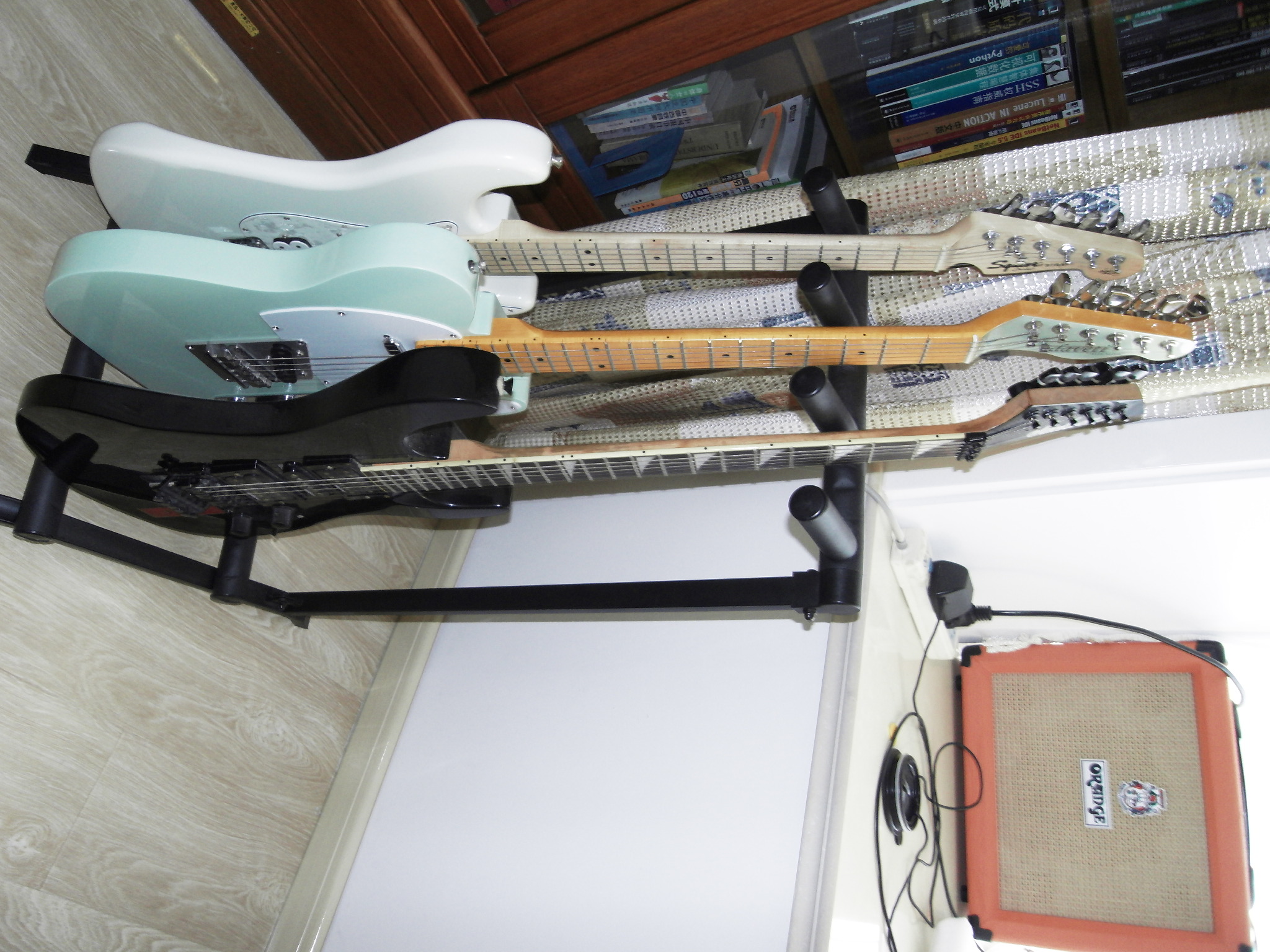
Guitar – My new personal designed Telecaster “daveti”, Orange and Song “Near Side”

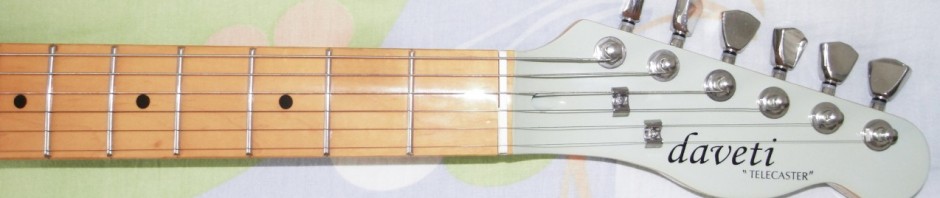
Aha, after almost 1 month’s wating, I’ve got my ‘Green’ now – a personal designed Telecaster guitar with my personal logo “daveti” on the head. ‘Green’ right now is my 3rd guitar after ‘White”(Squier Strat) and ‘Black'(Jackson). The other new member of my ‘family’ is ‘Orange’ – Crush 20LDX sound box. Below are some pics of my ‘family’, as well as a cover version of a folk song from Lifeng Zhong (钟立风-在路旁). Enjoy:)

Pics from left to right, row by row, are 'Green',
'Green's "daveti" logo, 'Orange' and the 'Family'.

Name: Near side of the road
Originated: Lifeng Zhong
Tune: A
Date: Oct 27, 2011
Rhythm: daveti
Vocal: daveti
Solo: daveti
Synthesize: daveti
Equipment: Telecaster "daveti", Orange Crush 20LDX,
Internal mac of ThinkPad T61
Software: Java Sound Demo, Winamp 5.2
Tab: A-Cm-D-A, A-Cm-D-E

Try this cover version of folk song...[audio:http://daveti.blog.com/files/2011/10/Rhythm_Vocal_20111027.mp3|titles=Rhythm_Vocal_20111027]
Posted in Music Prose | Tagged , , , | Leave a comment